A bearing heating up at three in the morning
The thermal reading raises the alert before the belt stops the line.
The problem Inspection depends on someone walking the plant and noticing.
Autonomous patrols with visual and thermal anomaly detection.
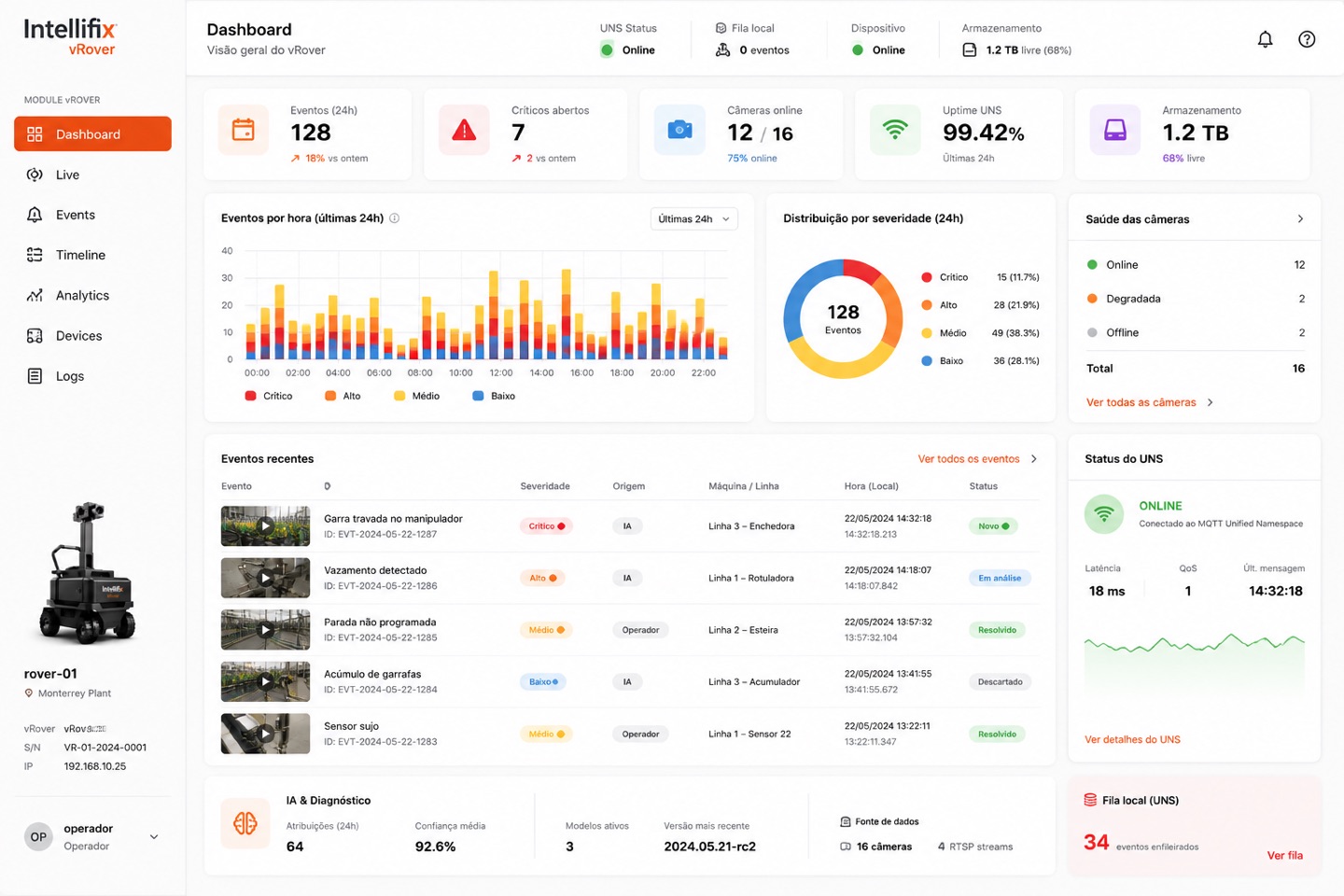
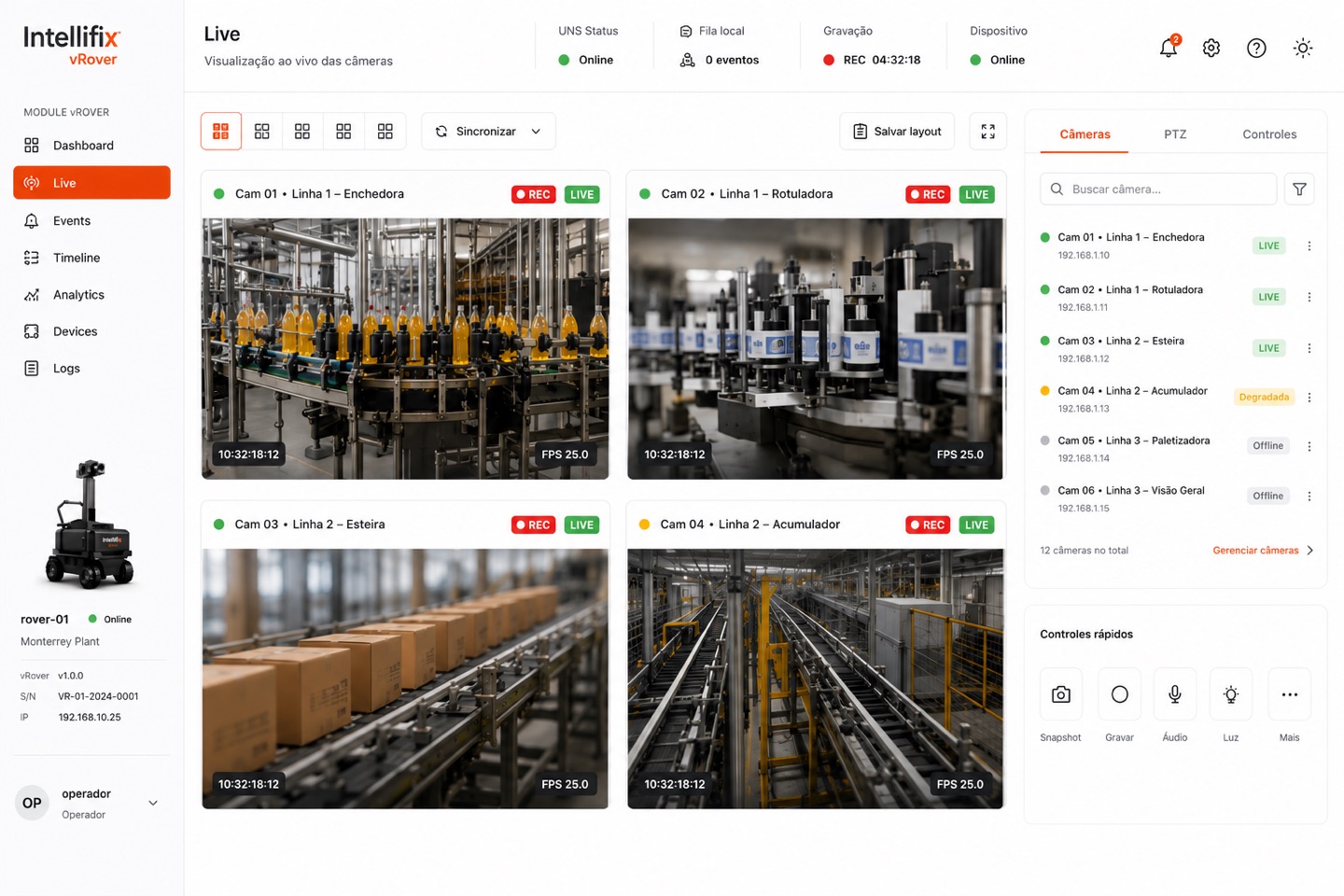
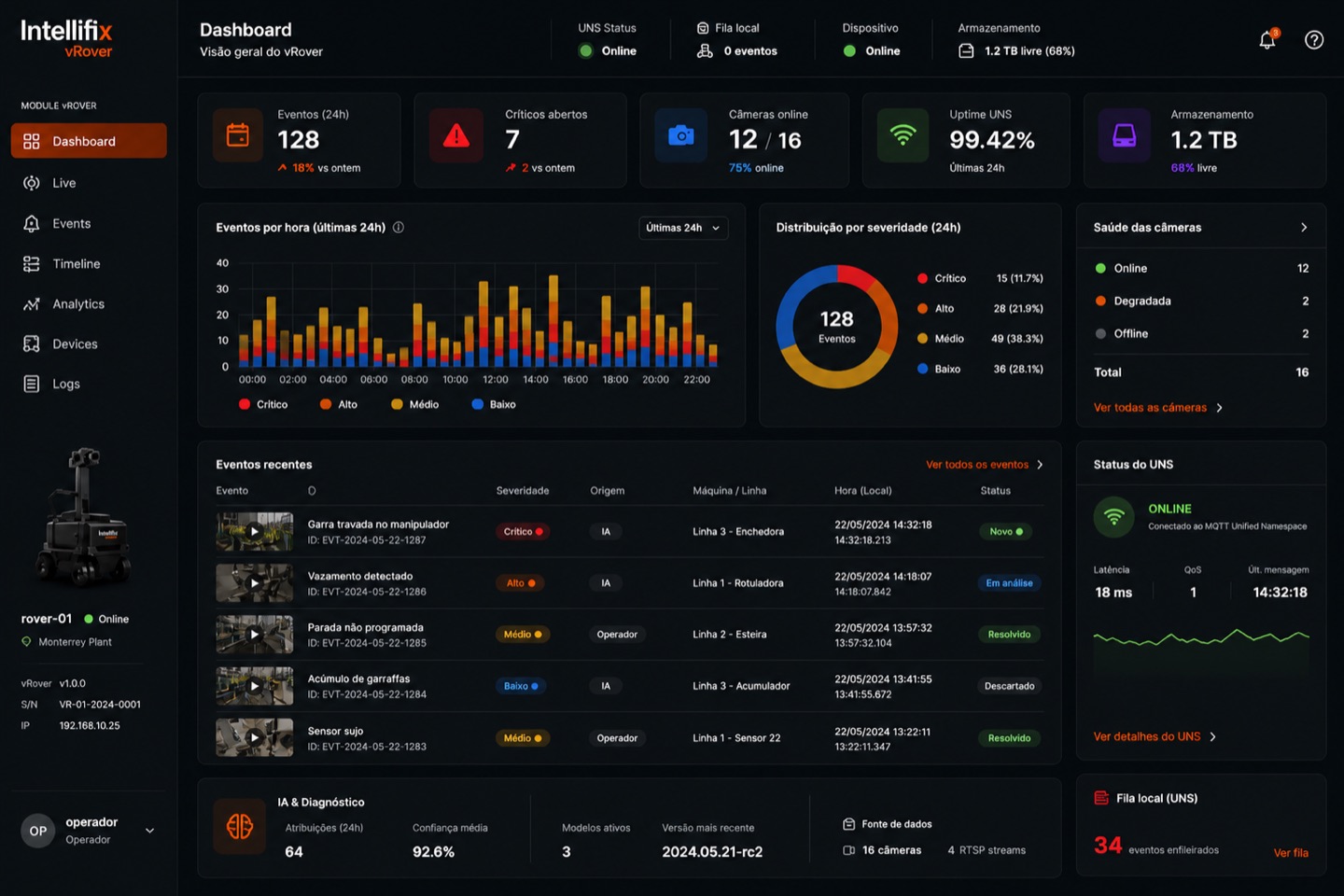
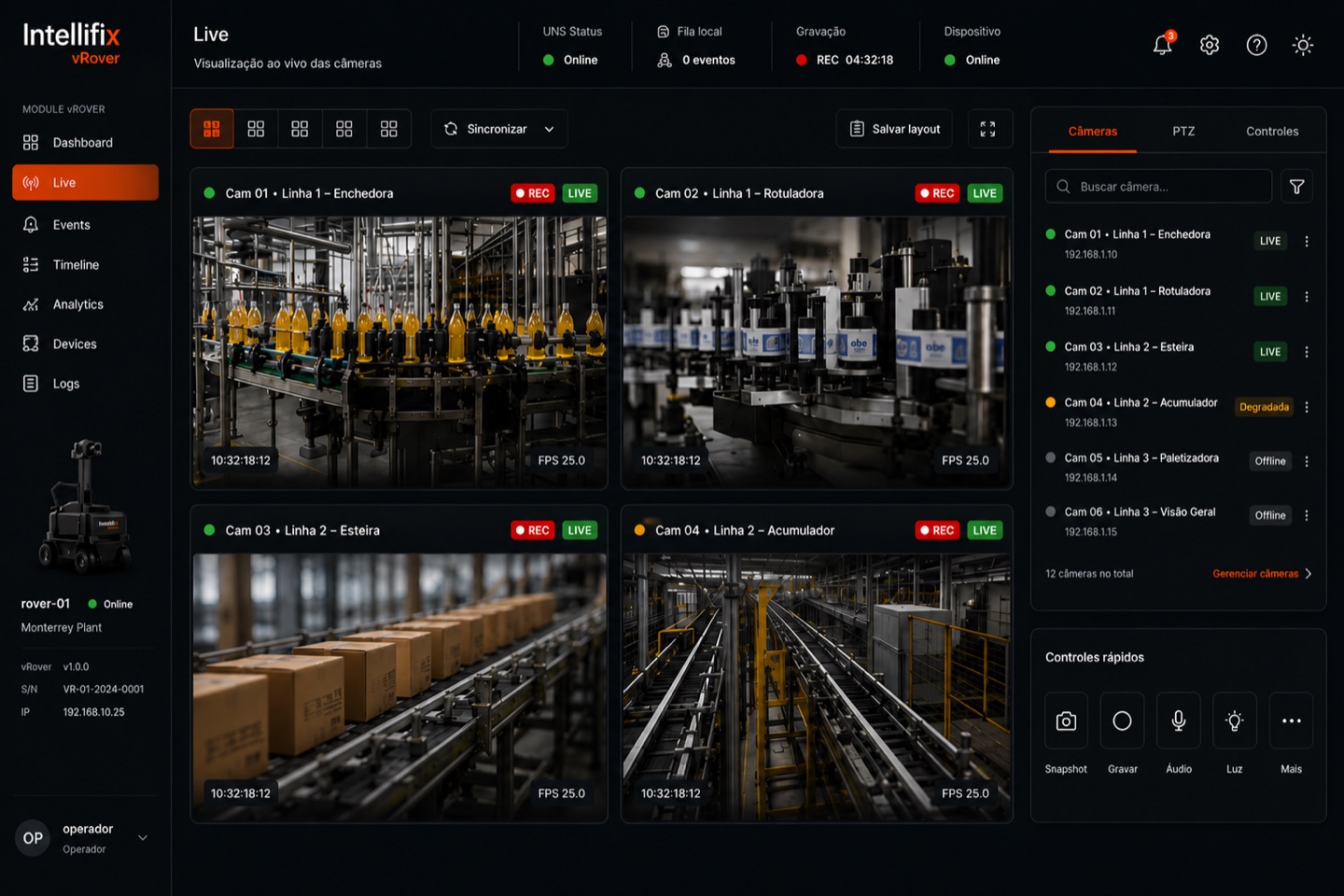
Patrol cameras and sensorsCaptures from the running application, with demonstration data.
Points, frequency and what to look at in each one. The patrol stops depending on who is available.
Visual and thermal capture at every point, on schedule, including the areas nobody likes to walk.
Each capture is compared with what normal looks like at that point, on that equipment.
The alert goes out immediately, with the image and the reading attached, so maintenance argues with facts.
Patrol cameras and sensors
This is the hard requirement. Without it, the capability has nothing to read.
The thermal reading raises the alert before the belt stops the line.
The route covers it every day, with a record, and not only when somebody happens to pass by.
The reading is collected without sending a person in, and the value is logged with the image.
The shift sees which points were covered and which ones raised an alert, without walking the route to find out.
The anomaly arrives with the image and the reading, so the deviation record starts from evidence and not from memory.
Inspection coverage becomes something you can look at, and the points that keep repeating show up before they stop the line.
Every capability reads from and feeds the others. What this one exchanges inside the operation:
An anomaly caught on patrol is an unplanned stop that never reaches the loss tree.
The point being inspected is the same equipment process monitoring already reads, from the outside instead of from the tag.
Visual evidence attaches to the deviation record, and the treatment starts with a picture.
Bring the map of one patrol route. In the demo we set the points and show the anomaly alert.