Temperature that changes with the shift
The setpoint stops depending on who is at the panel and the band gets tighter across all three shifts.
The problem Variation in the process that nobody sees in time to correct.
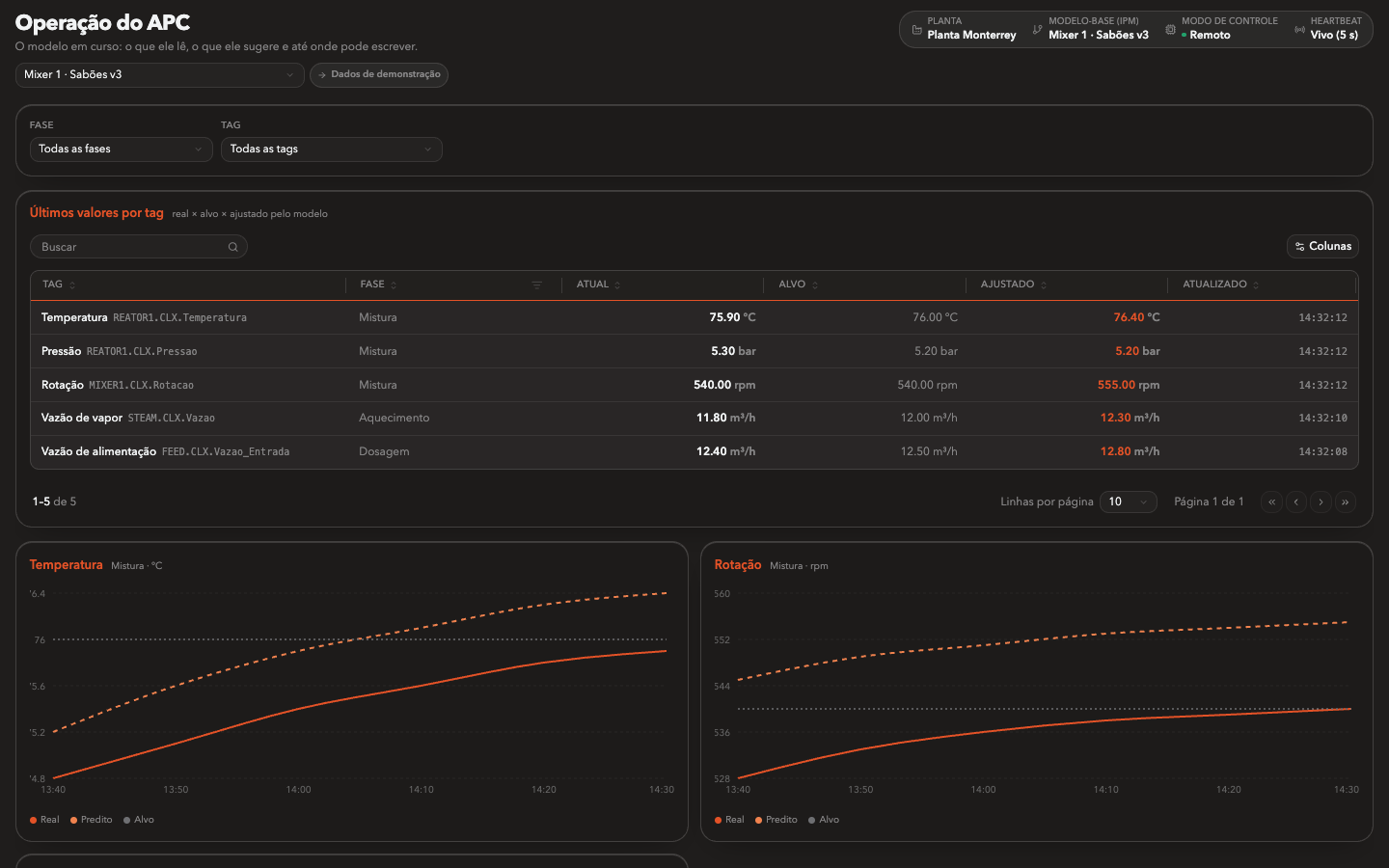
Less variation: the system suggests adjustments and corrects with your authorization.
Nothing is written without human authorization The model suggests, a person releases it. Control mode, write tags and interlocks stay visible on screen.
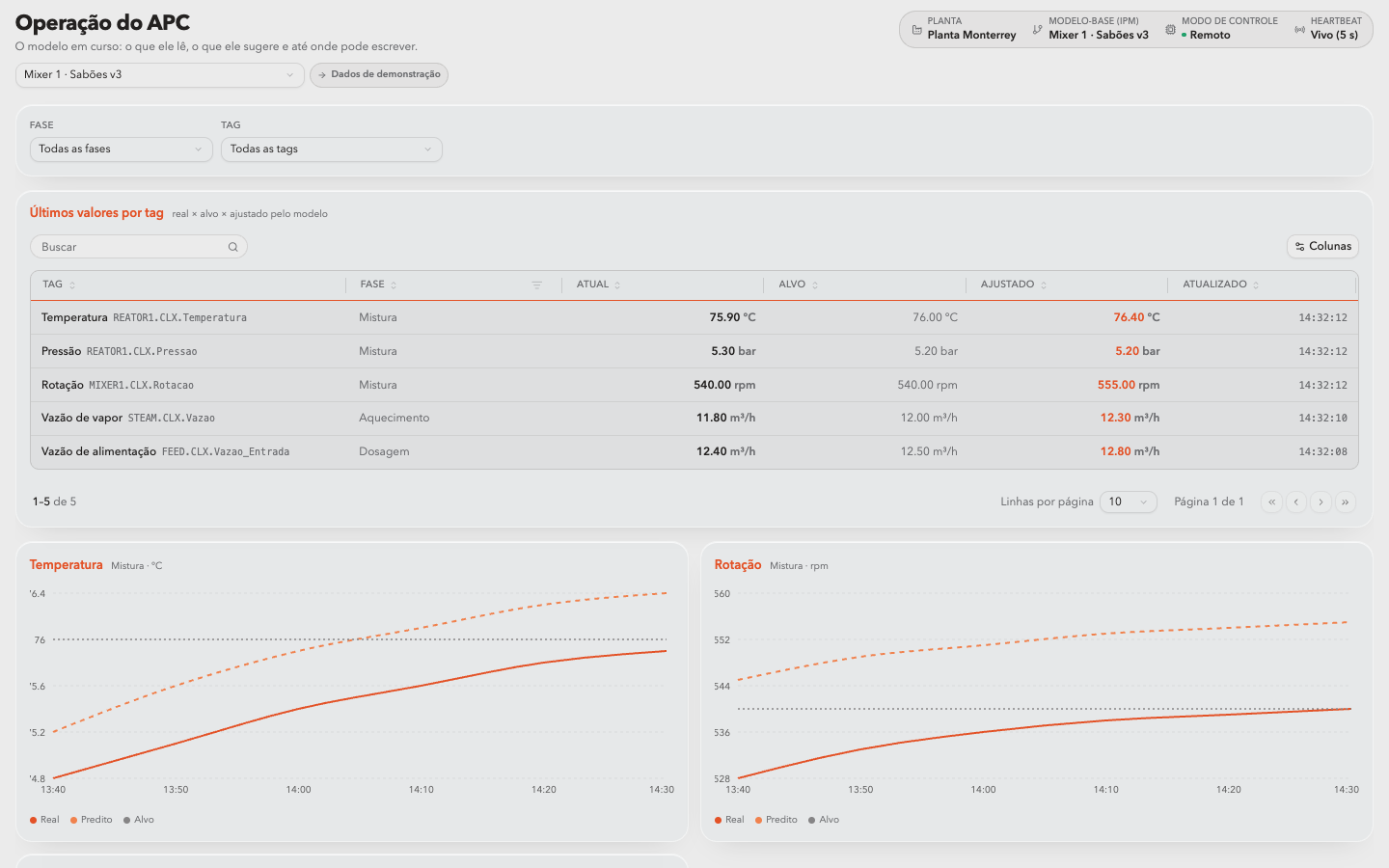
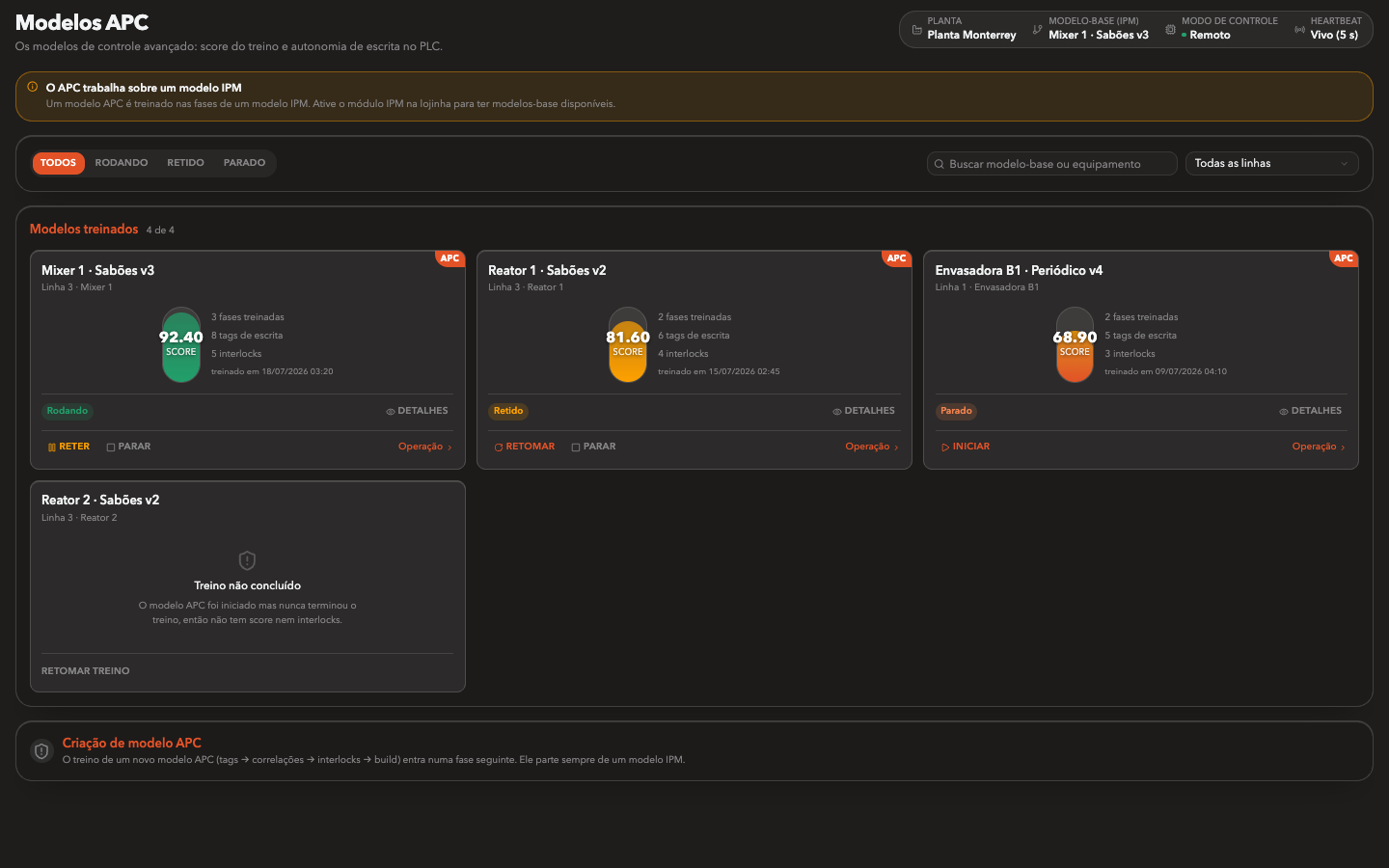
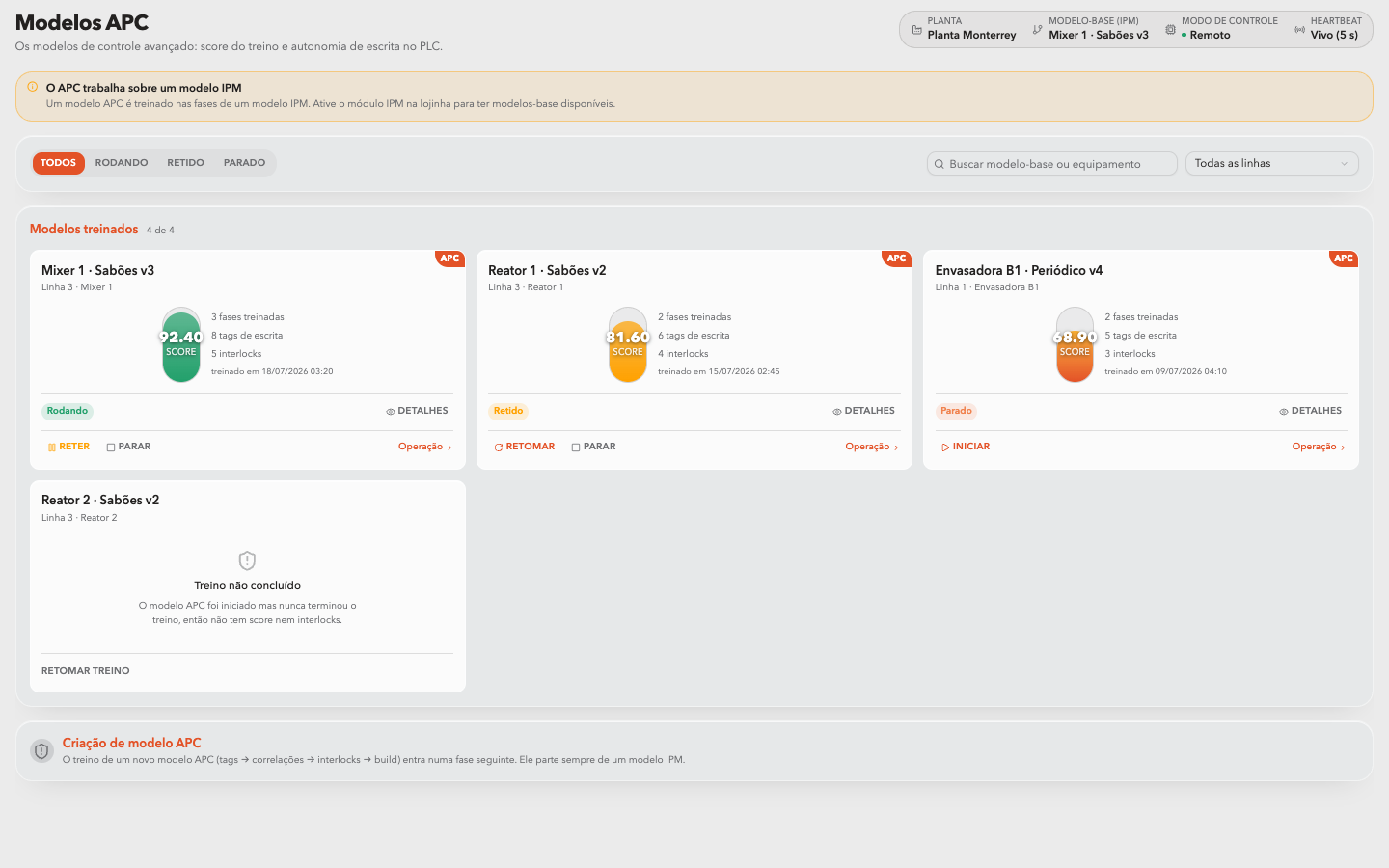
Captured from the running app with demonstration data. Click a screen to open it at full size.
Setpoints and process variables come in per stage, already tied to the equipment that owns them.
Each variable is compared with its target range, and the drift that costs yield or quality is separated from the noise.
The suggestion comes with the expected effect, so the operator sees what changes before anything moves.
Apply it assisted, or leave it as a recommendation on screen. Nothing is written to the process without permission.
Setpoint readings (via IPM)
This is the hard requirement. Without it, the capability has nothing to read.
Real value, target and model adjustment sit on the same line, tag by tag, while the batch is still running.
The suggestion arrives next to the predicted curve, so the call is not a guess about what the process will do.
The correction only leaves the screen when a person releases it. Control mode, write tags and interlocks stay visible.
The setpoint stops depending on who is at the panel, and the recovery after a stop follows the same route.
The setpoint stops depending on who is at the panel and the band gets tighter across all three shifts.
The adjustment cuts off-standard consumption without pushing the product out of spec.
The recovery after the setup is guided, instead of each operator finding their own way back.
The panel says what to adjust and why. Applying it takes one authorized click, and turning the suggestion down is a valid answer too.
The target range per variable is written down and comparable, and the history shows whether the variability really dropped on the product.
Every model carries its score, the trained phases and the tags it may write, so the reach of the automation is auditable.
Every capability reads from and feeds the others. What this one exchanges inside the operation:
Mandatory source. This capability inherits the process stages, the variables and the setpoint readings from process monitoring.
The best real run defines the setpoints worth chasing. Stabilization is what holds them shift after shift.
Quality reporting confirms whether the variability actually dropped, on the product and not only on the chart.
Bring one variable that swings and its target range. In the demo we show the suggestion and the expected effect.