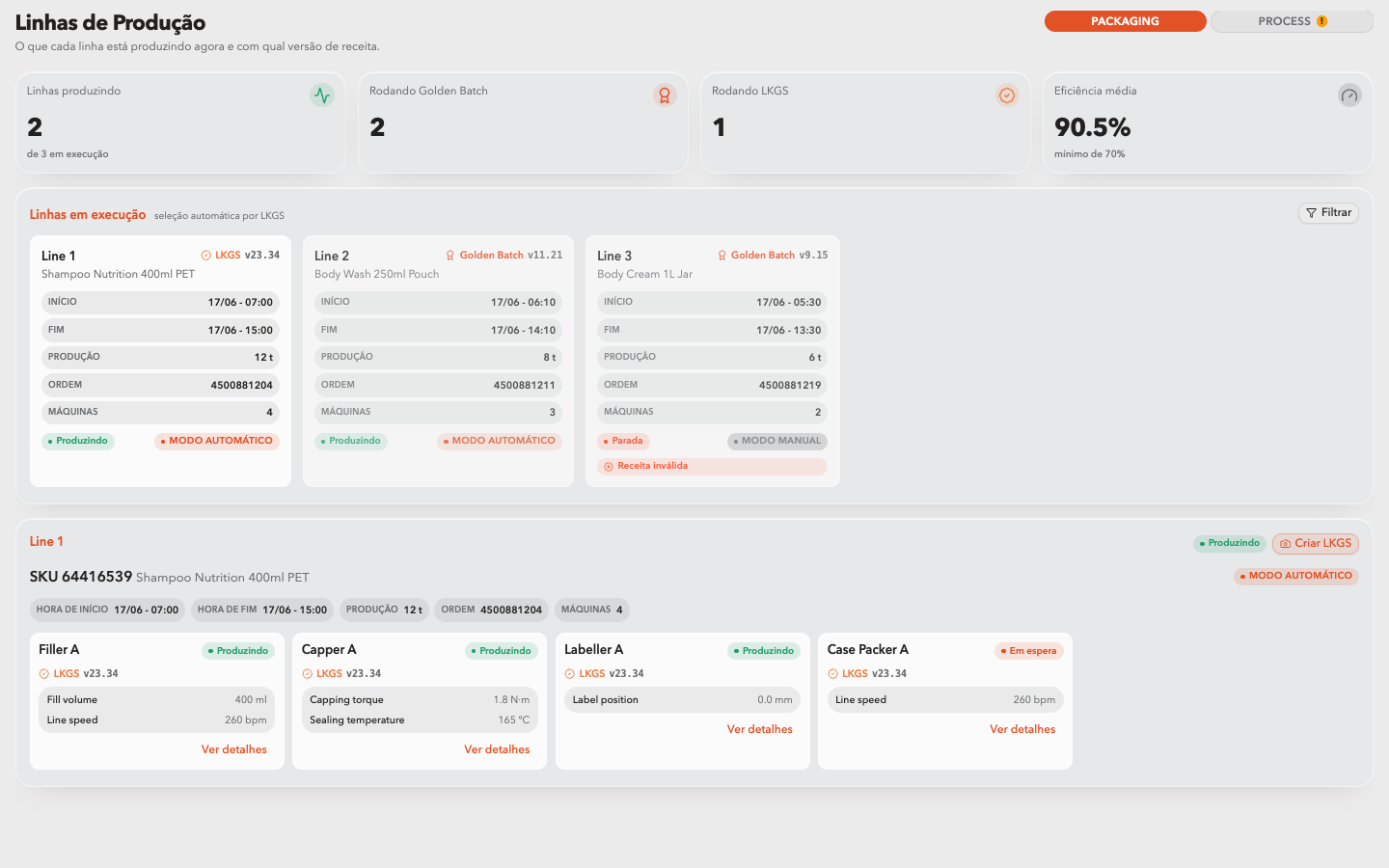
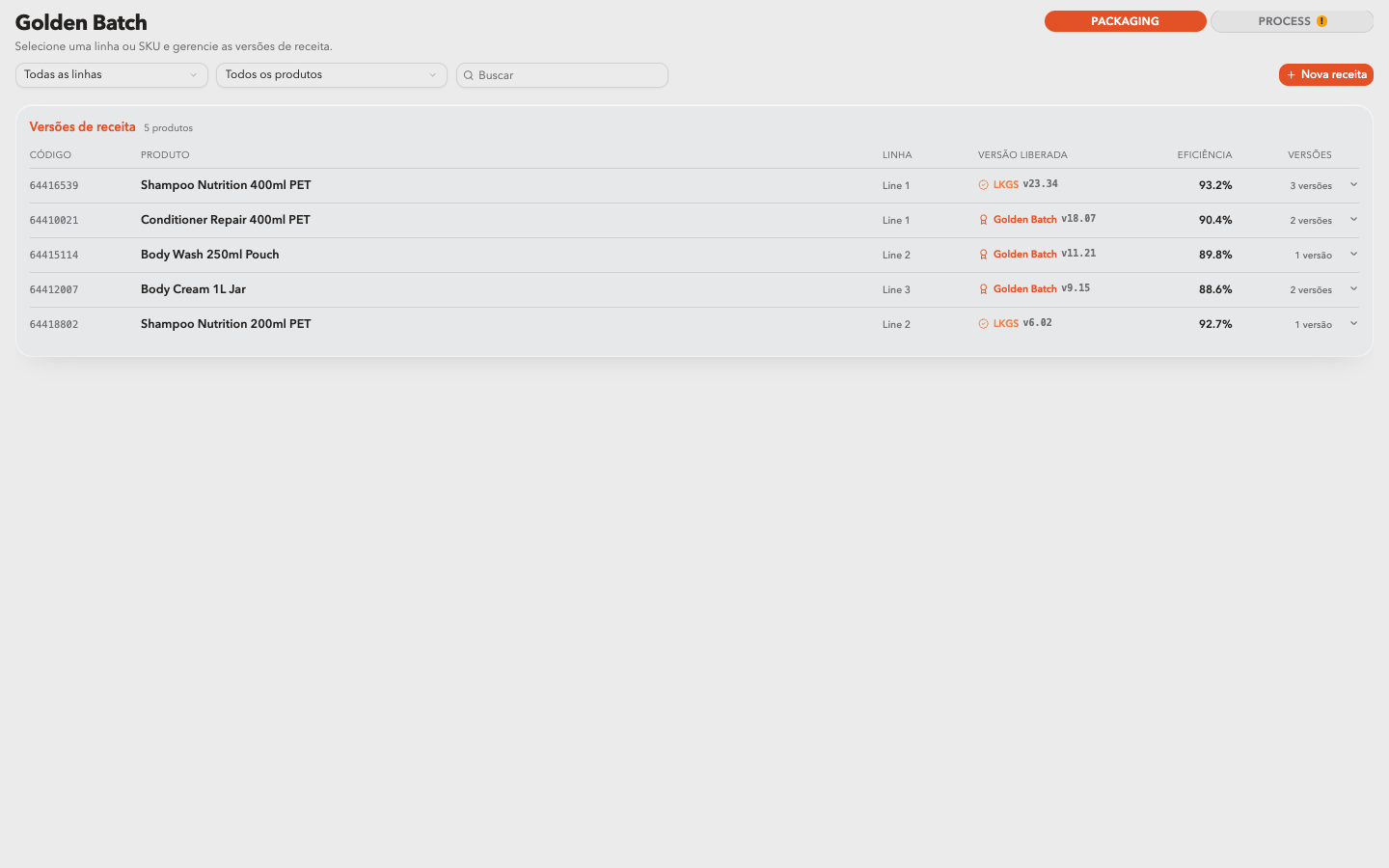
The same product runs better on machine 2
Compare the recipes and see which setpoints explain the gap, instead of blaming the equipment.
The problemThe best batch happened once, and nobody knows how to repeat it.
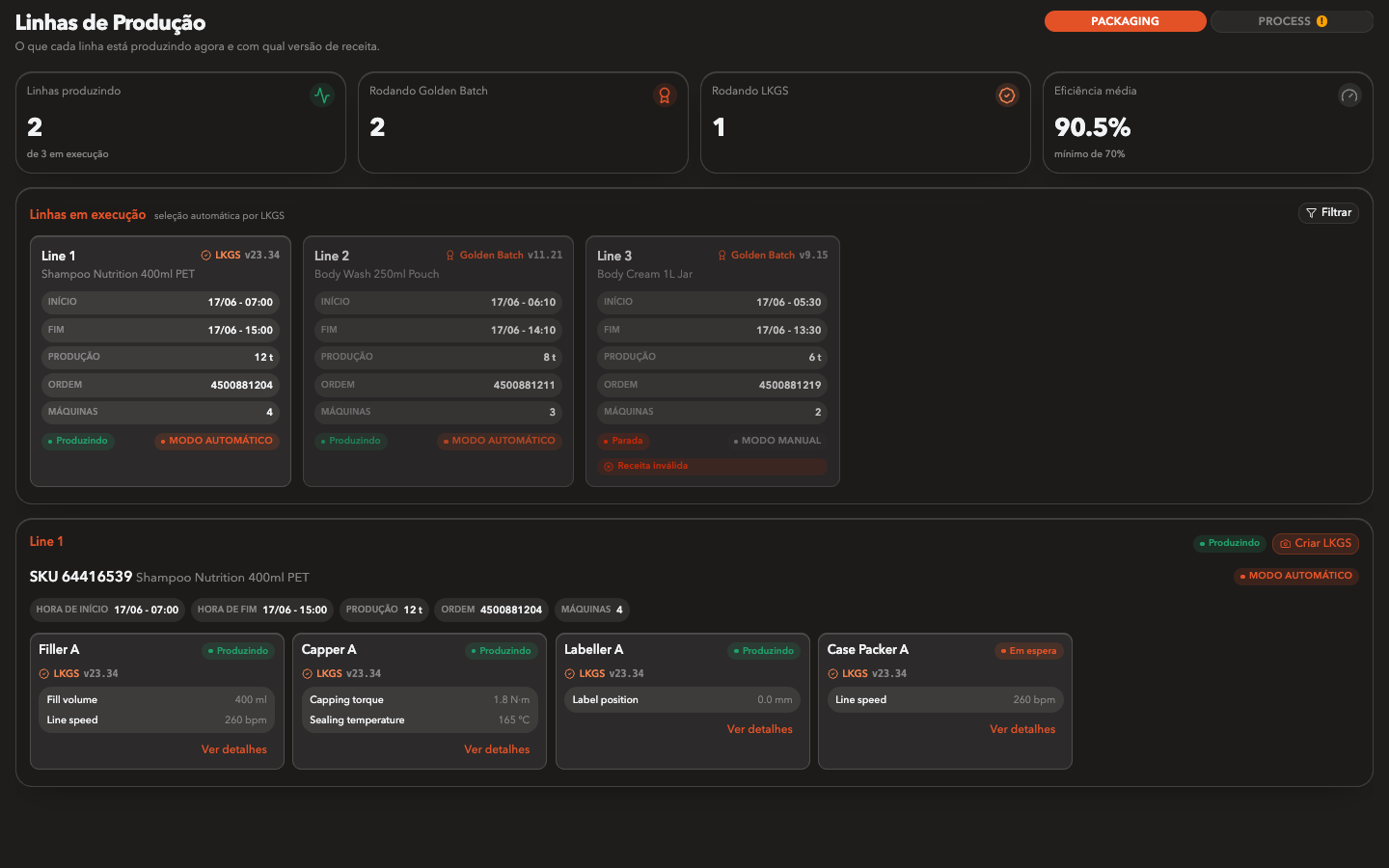
The ideal recipe on each machine, comparing the standard with the best real run.
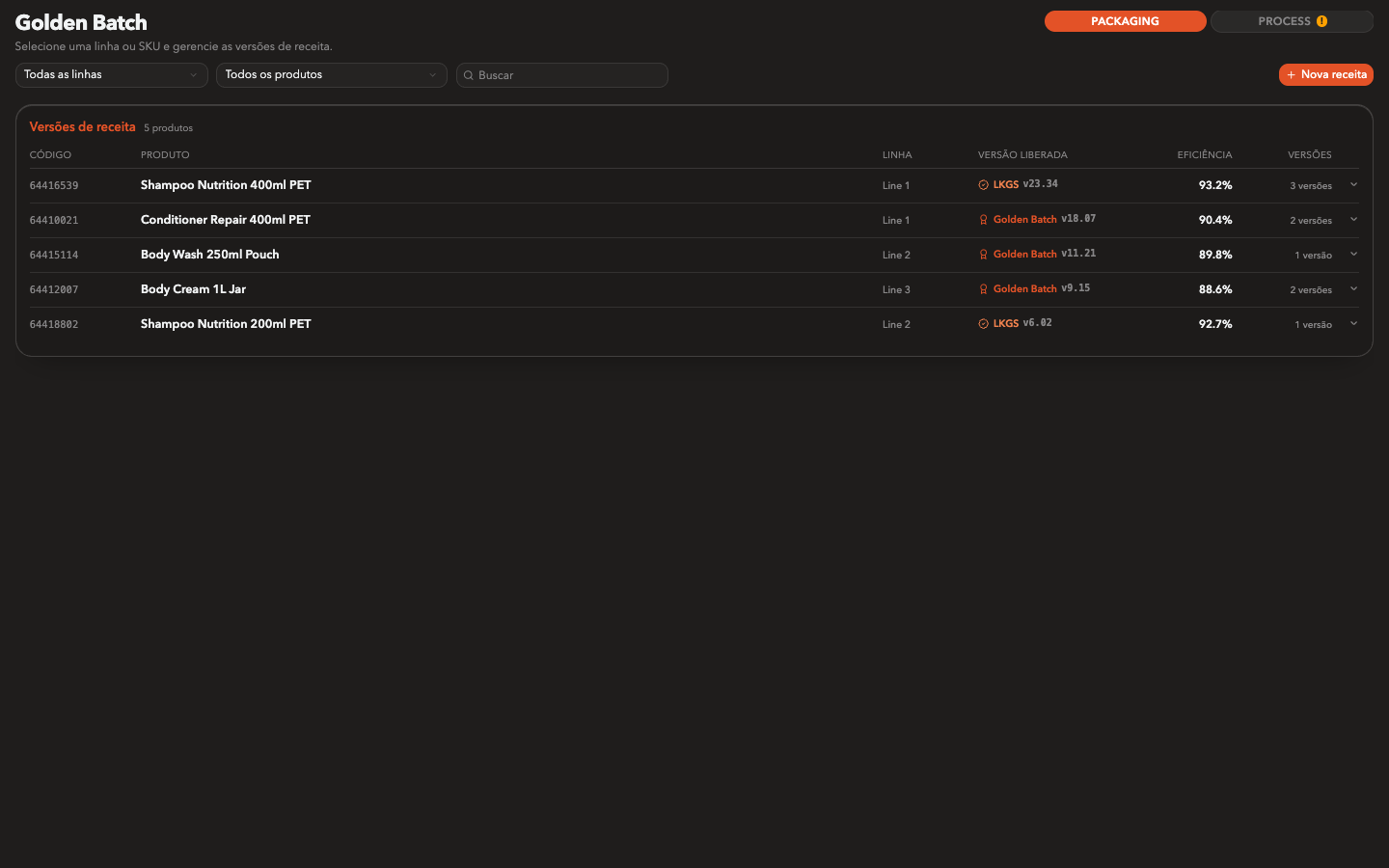
Every run of the product on each machine comes in with its setpoints and its result.
Yield, quality and consumption decide which run was actually the best, not the one people remember.
The two recipes are compared setpoint by setpoint, so the difference is visible instead of being a hunch.
It goes back to the machine as the new reference, and the next batch is measured against it.
Batch history
This is the hard requirement. Without it, the capability has nothing to read.
Compare the recipes and see which setpoints explain the gap, instead of blaming the equipment.
The run from last quarter is found, opened and turned into a repeatable recipe.
Find the recipe that held the result with the new supplier and make it the standard.
The shift opens the recipe already tuned, with the setpoints that held the best result.
Standard and best real run side by side, and a change defended with the run that proves it.
Which products still run below their own best, and where tuning the recipe pays off first.
Every capability reads from and feeds the others. What this one exchanges inside the operation:
Readings per stage are what make a batch comparable. Without them, history is a start and an end, with nothing in between.
This capability says which setpoints to hold. Stabilization is what holds them while the process drifts.
The quality result of the batch is what ranks the run, and what says the new standard is really better.
Bring the history of one product on two machines. In the demo we find the best run and compare the setpoints.