An absence on Sunday night
The list of who is qualified and rested for that post comes up before the shift starts.
The problem The shift starts with posts nobody on the floor is qualified to run.
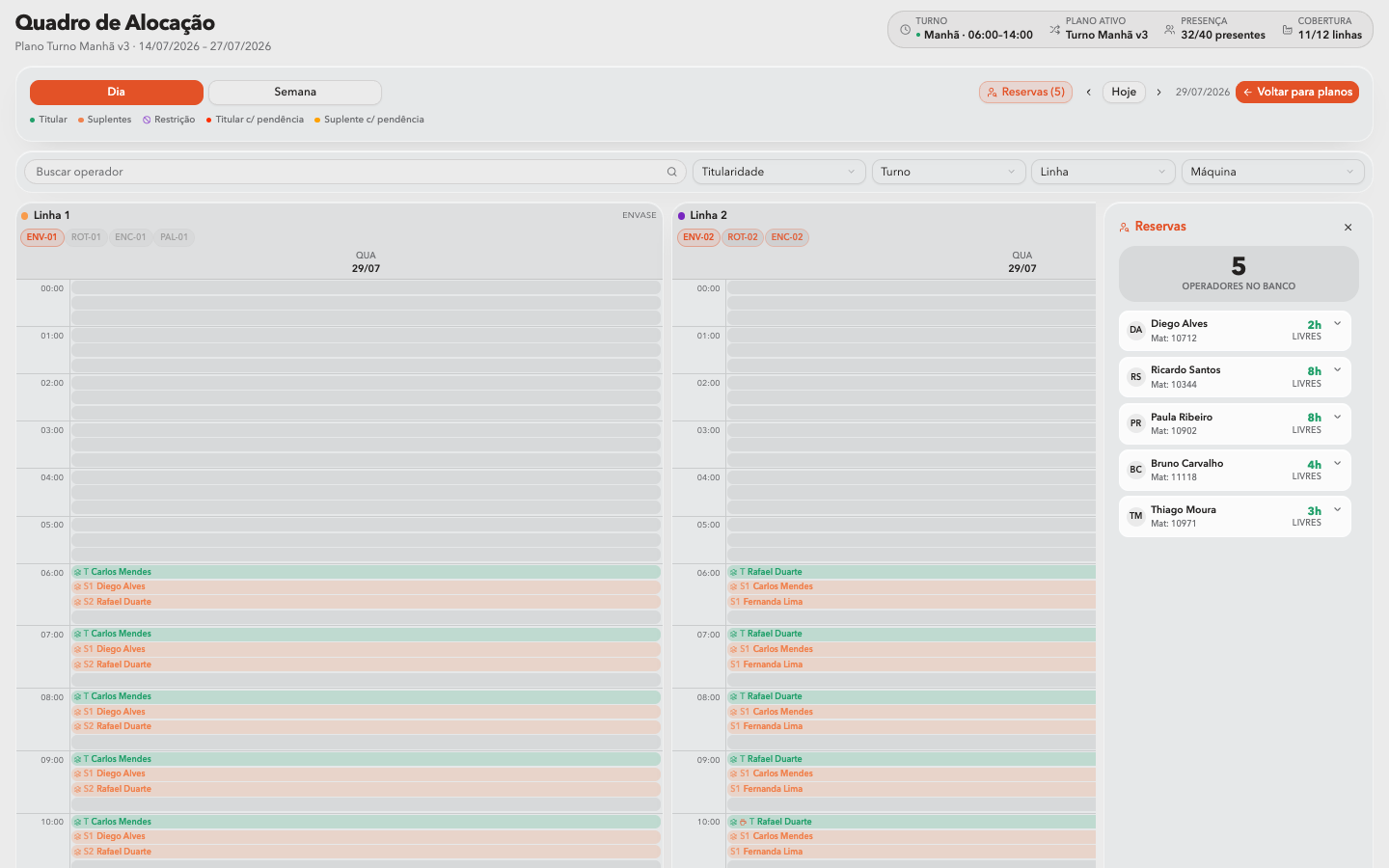
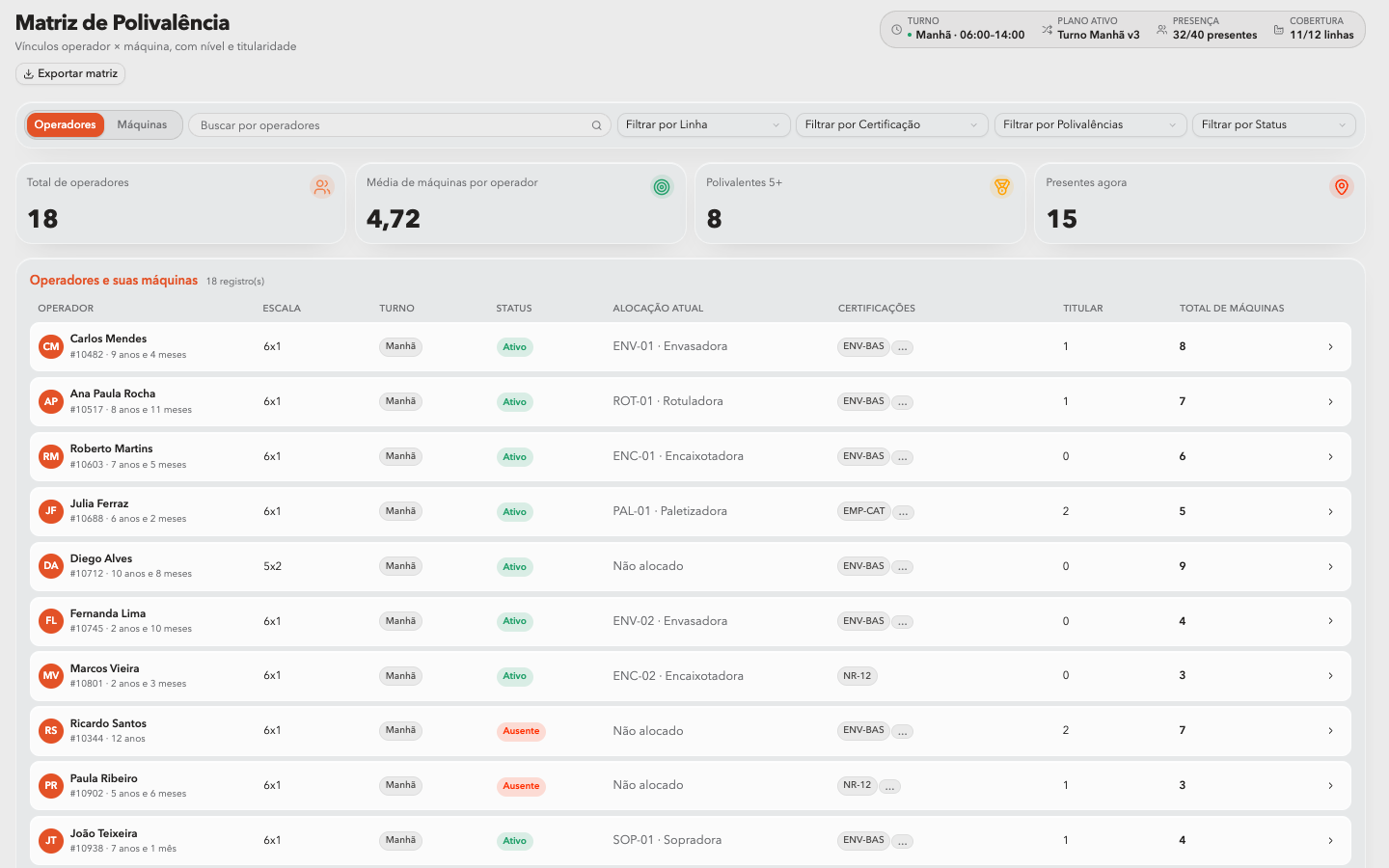
Shift covered with qualified operators, a skills matrix and automatic allocation.
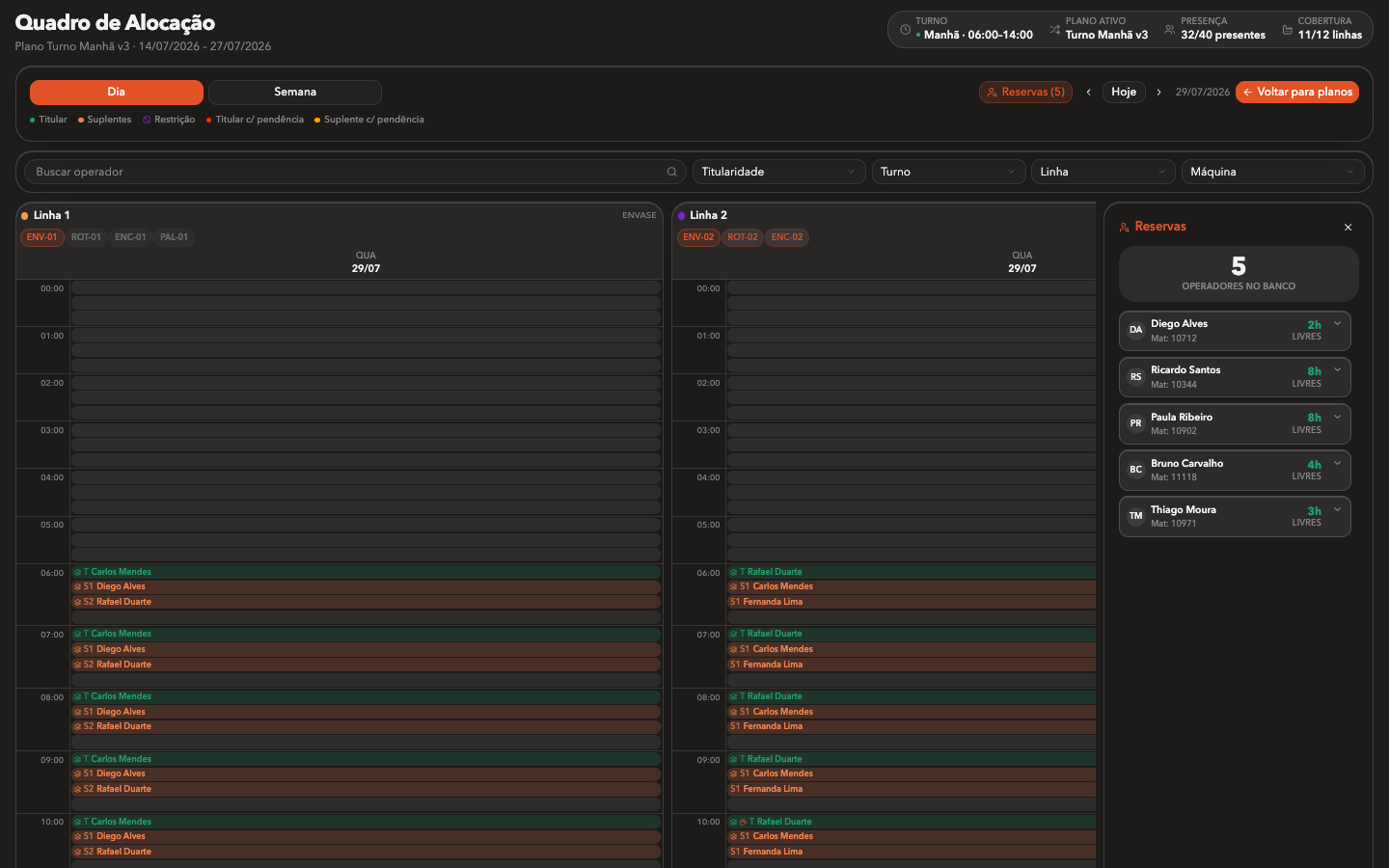
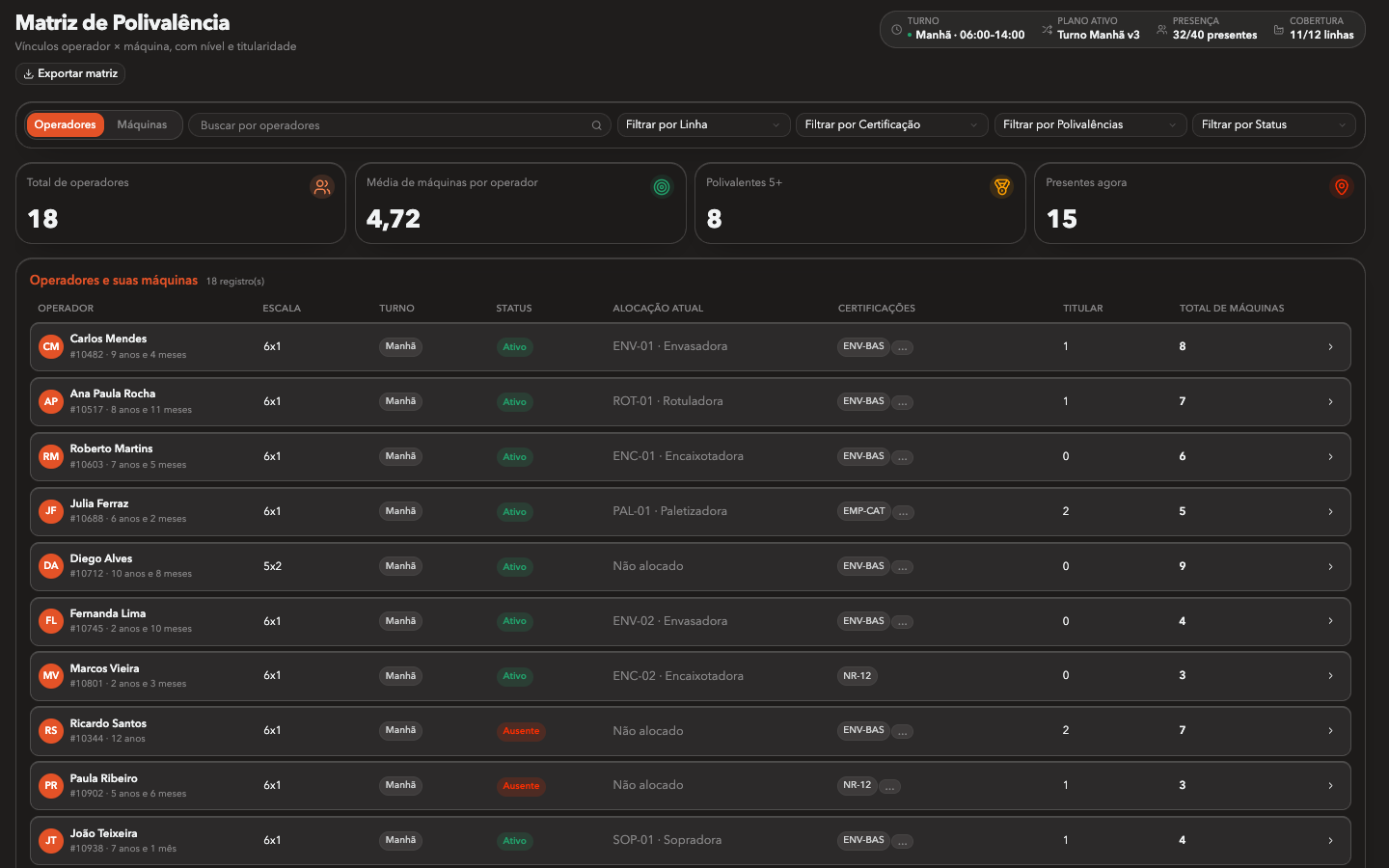
Captured from the product, on demonstration data. The allocation board opens the shift; the skills matrix shows operator by machine. Click a screen to open it full size.
Operators, qualifications, training and validity build one matrix instead of many spreadsheets.
Each position on the line declares the qualification it needs, so coverage means something.
Skill, shift, rotation and rest rules produce an allocation that can actually be run.
A post without a qualified operator appears in advance, with who can cover it.
Operator records
This is the hard requirement. Without it, the capability has nothing to read.
The list of who is qualified and rested for that post comes up before the shift starts.
The alert comes before the audit, and before the operator is allocated to the post again.
The matrix shows who is close, and what training closes the gap.
Sees the uncovered post before the shift starts, and who can take it without breaking a rest rule.
Every critical post run by someone with a valid qualification on record, with the history an audit asks for.
The training plan and the roster come from the same base, with the qualification gap visible line by line.
Every capability reads from and feeds the others. What this one exchanges inside the operation:
A line with nobody qualified is not really available. Coverage corrects the capacity the plan trusts.
Coverage and experience explain part of the difference between shifts on the same line.
Who signed the check is the same record as who was qualified for that post at that hour.
Bring your operator list and the posts of one line. In the demo we build the matrix and cover a shift.