The check that never left the clipboard
It reaches the meeting on the same day, with a chart, instead of being filed in a folder.
The problem Checks on paper, and deviations found after the batch is gone.
From the line check to the action plan, with control charts and deviation prediction.
Quality reportingCaptured from the product, with demonstration data. Click to enlarge.
The plan of checks reaches the operator device at the right frequency, with the variable, the limit and who signs it.
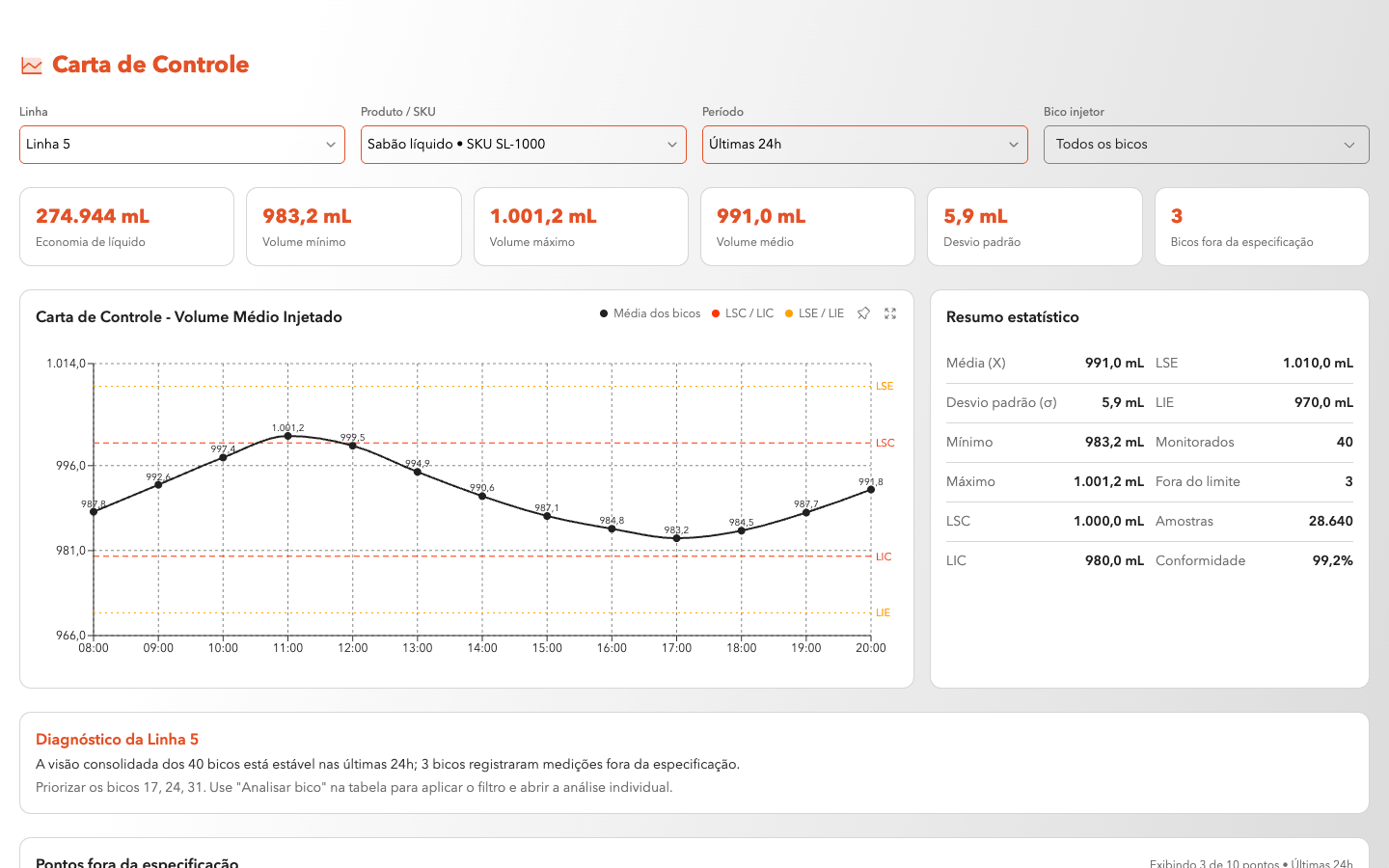
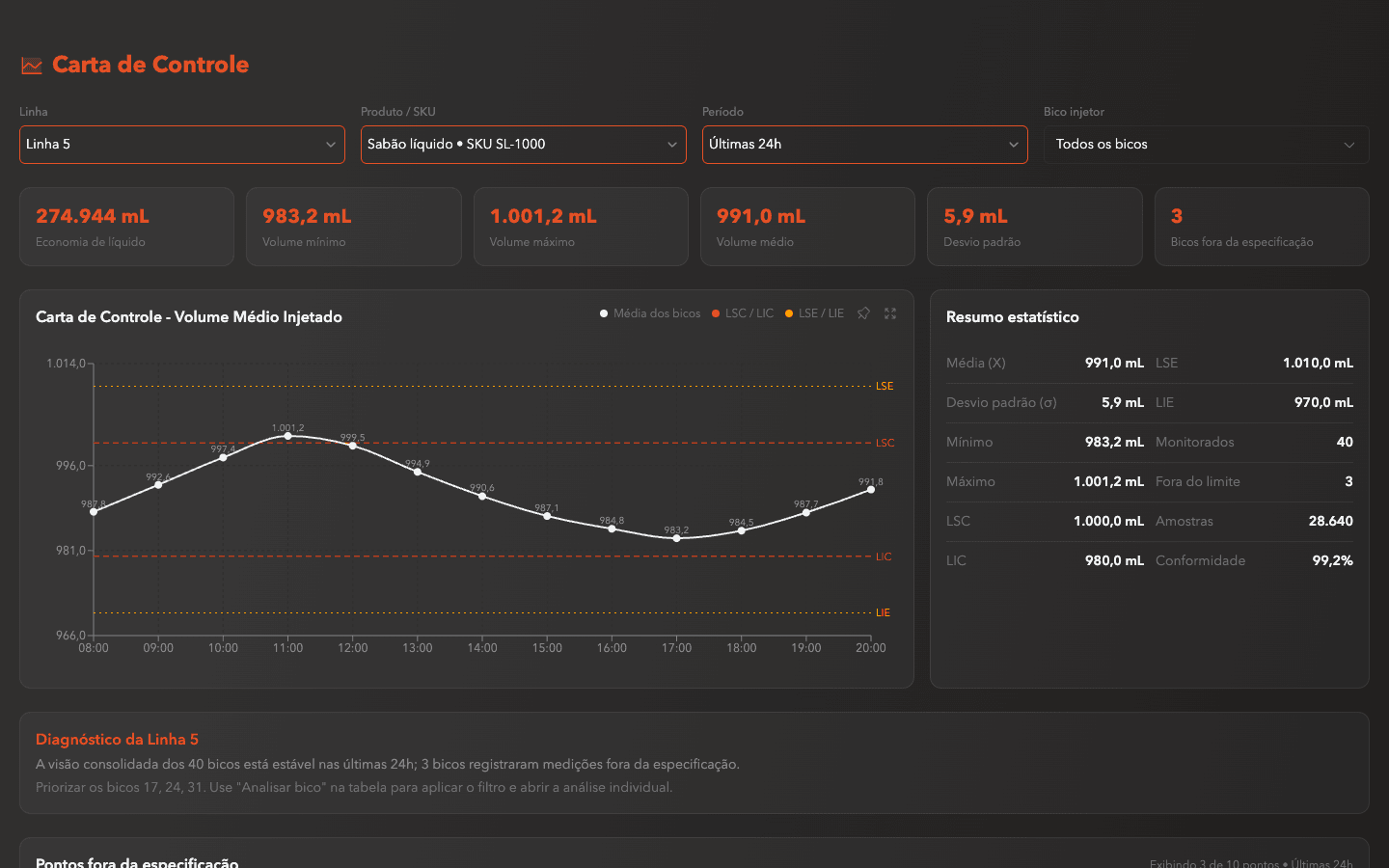
Every measurement plots on a control chart, with the trend and a prediction of where it is heading.
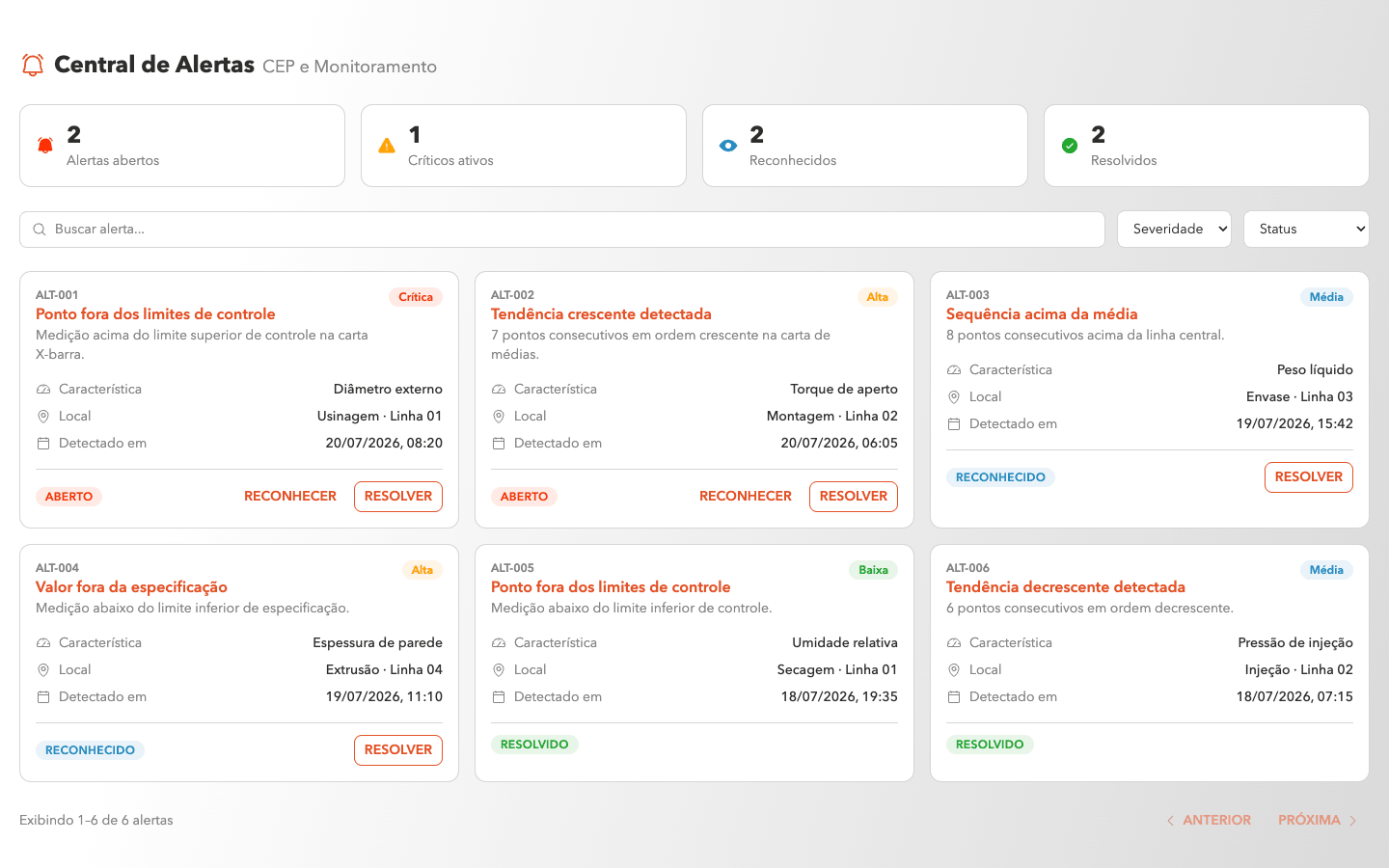
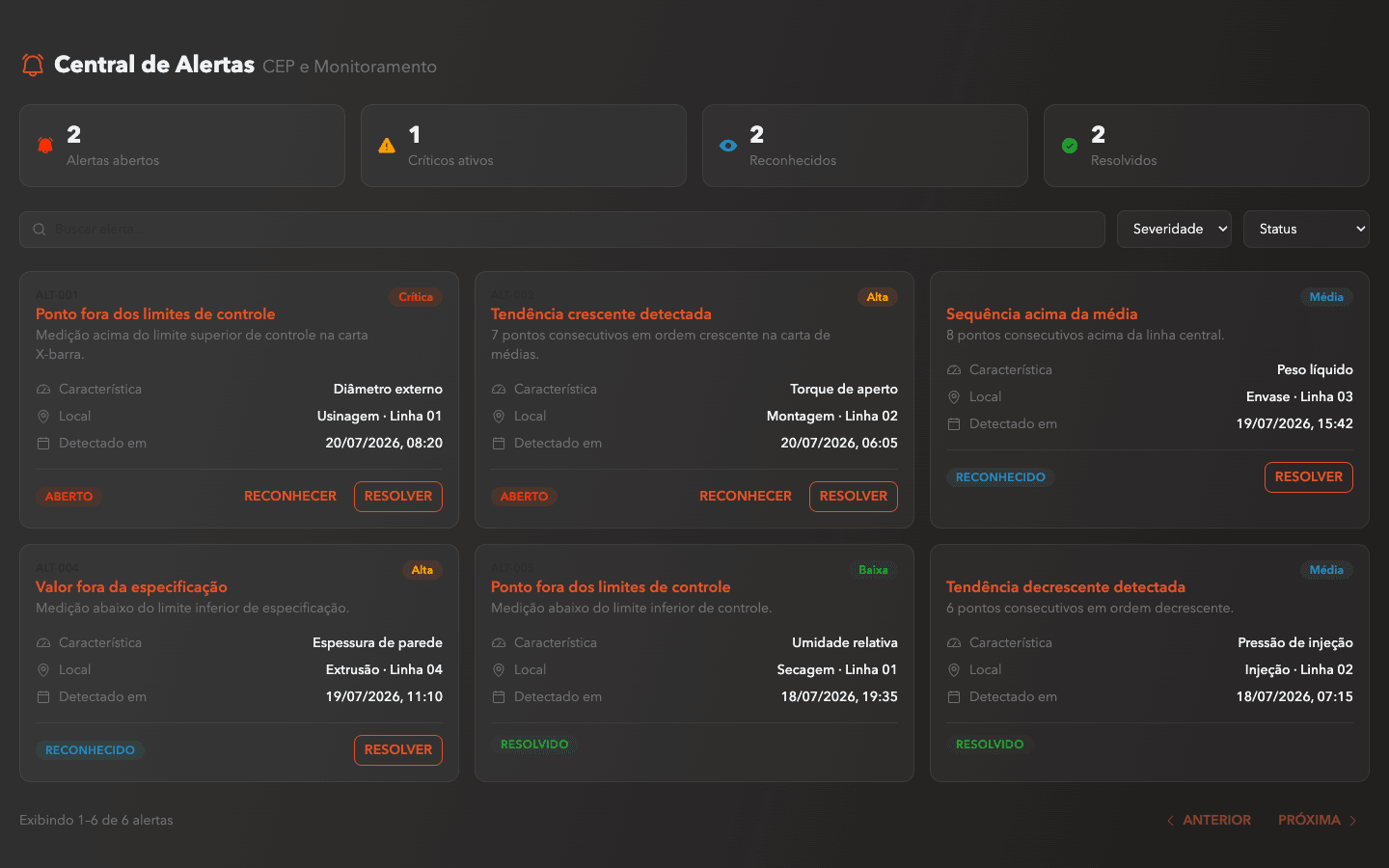
Cause, action, owner and date. The deviation stops being a note in a notebook.
Follow-through to closure, with the evidence kept for the audit and for the next time it happens.
Quality reporting
This is the hard requirement. Without it, the capability has nothing to read.
It reaches the meeting on the same day, with a chart, instead of being filed in a folder.
The trend is caught mid run and the correction happens while the product can still be saved.
The record, the signature and the treatment come up in seconds.
The check arrives on the device at the right time, with the limit in sight before the value is written. No clipboard, and no rework at the end of the shift.
Control charts per variable, with trend and prediction, and the deviation history to argue with the cause instead of the opinion.
Open deviations, who owns each action and what closed on time, in one place, ready for the audit and for the meeting.
Every capability reads from and feeds the others. What this one exchanges inside the operation:
The deviation history points to the recipe and the machine that behave best for that product.
A confirmed trend on the chart is the justification for the setpoint correction, before the batch is lost.
Rejects reported here become the quality loss in the indicator, with no second spreadsheet.
Bring your plan of checks and one recurring deviation. In the demo we run the check and open the treatment.